
The deluge of offerings in the primary market, a muted results season and increasing talks of a Fed taper may quicken the pace of overseas investors selling Indian equities in the near term. The next few weeks may see a dozen companies tap the market for initial public offerings and raise about Rs 30,000 crore. These include the likes of Zomato, Glenmark Life Sciences, Utkarsh Small Finance Bank and Seven Islands Shipping.

'Q1 is going to bear the brunt of the second wave, exposing full-year GDP forecasts to downward revisions, unless phase-3 of vaccination is executed quickly.'

Unified Payments Interface (UPI), the flagship payments platform of the National Payments Corporation of India (NPCI), touched a record high both in terms of volume and value of transactions in June after a slump in April and May. The platform recorded 2.8 billion transactions worth Rs 5.47 trillion in June, up 10.6 per cent in volume terms and 11.56 per cent in value terms over May. This is in sync with the opening up of the economy as Covid cases gradually came down from its peak in mid-May and lockdowns were eased in various places.

'As valuations of large-caps appeared to be out of whack, investors started lapping up quality mid-caps and small-caps, which were available at relatively comfortable valuations.'
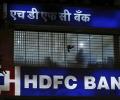
After facing multiple outages that irked the regulator, the country's largest private sector lender, HDFC Bank, is revamping its technology infrastructure by making large scale investments, wherein it is bringing new talent, getting into cloud-native stacks, a shift from the traditional monolithic IT infrastructures, and working with strategic partners for better products and services. The bank management is clear that it will do whatever it takes in line with its growth path to ramp up its technology infrastructure.

'The overall death claims have gone up.'

The National Company Law Tribunal (NCLT) has approved the resolution plan of Twin Star Technologies -- a promoter entity of the Vedanta Resources group -- for the Videocon group. But it has pointed out that the successful resolution applicant is "paying almost nothing" as the amount offered is only 4.15 per cent of total outstanding claim. It noted the hair cut for all the creditors is 95.85 per cent and suggested to both committee of creditors (CoC) and the successful applicant an increase in the payout.

'While the country has been hit hard from a strong second wave of Covid, we believe the markets are willing to look through that.'

Auto-debit payment bounces have gone up for the second consecutive month in May, emphasising the stress building up due to a halt in economic activities as authorities lock down various parts of the country to stop the spread of the virus in the second wave. According to the National Automated Clearing House (NACH) data, in May, of the 85.7 million transactions initiated, 35.91 per cent, or 30.8 million transactions, failed.

The Mumbai Bench of the National Company Law Tribunal (NCLT) on Monday approved Piramal Group's resolution plan for the beleaguered Dewan Housing Finance Ltd (DHFL), which has been reeling from the insolvency process since 2019. The plan put forward by Piramal Group, which has offered to pay Rs 37,250 crore, has been approved by the committee of creditors (CoC), the Reserve Bank of India (RBI), and the Competition Commission of India (CCI).

The Securities and Exchange Board of India (Sebi) has deferred the diktat requiring foreign investors to disclose their mobile number, email addresses and income details to depositories, a move believed to be aimed at curbing practices such as round tripping and money laundering. "Based on the representations received from MIIs (market infrastructure institutions), Sebi has decided to extend the deadline for making 6-KYC attributes mandatory for new accounts opened by 1 month to July 1, 2021. "Participants are accordingly requested to take note of the above and ensure compliance," NSDL said in a note on Tuesday. The regulator is also meeting custodians this week to thrash out a solution and address investors' concerns.

'It is critical that the Covid curve does not have a fat tail and the chain is broken quickly.'
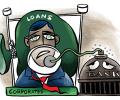
Public sector banks, including the country's largest lender State Bank of India (SBI), have come out with a templated approach for restructuring retail and small business loans of up to Rs 25 crore under the Reserve Bank of India's (RBI) Covid restructuring package 2.0. They have also come out with standardised products to make funds available to business entities for improving healthcare infrastructure and to individuals for meeting Covid treatment expenses. Business loans have been divided into three categories.

Top officials said asking employees other than the fund management team to mandatorily invest a fifth of their salary goes against the principle of natural justice.

Industry players estimate the average payouts to be in the range of 50-75 per cent of the bankers' annual salaries. For the top performers, the bonuses could be 100-125 per cent.

These products are extremely transparent and are the lowest charged products in the insurance space. The policyholder has to only pay the fund management charge. Hence, from the cost side, ULIPs are very competitive.

Operational and compliance challenges foreseen for fund houses in deducting tax at source, resulting in possible TDS mismatches and disputes with investors.

The Nifty Bank index has come off 15 per cent from its peak in February, underperforming the benchmark Nifty which is down 6%.

Debt funds typically held 0-5 per cent of their portfolio in cash and cash equivalents before this Sebi diktat.

The SME segment has been grappling with lack of liquidity and lacklustre institutional participation.
 © 2026 Rediff.com - Advertise with us - Disclaimer - Privacy Policy - Sitemap - Feedback - About us - Terms of use - Grievances